

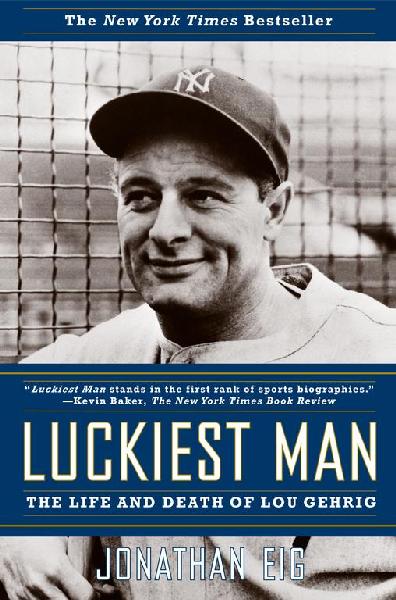
He was born in New York City on June 19, 1903, and attended Columbia University on a football scholarship. But he excelled at baseball and later signed a contract to play for the New York Yankees. His career stats include a .340 batting average, 2,721 hits, 493 home runs, 23 grand slams, and 1,995 runs batted in. He played with legendary players Babe Ruth and Joe DiMaggio. He was the first player to have his uniform number retired, and he was inducted in baseball’s Hall of Fame in 1939.
But today Lou Gehrig is best known for the disease that brought his brilliant career to an abrupt halt: amyotrophic lateral sclerosis, described at the official Gehrig web site as follows:
The initial signs of ALS may vary. Symptoms include stiffness and increasing muscle weakness, especially involving the hands and feet. The disease eventually affects speech, swallowing and breathing. Because ALS only attacks motor neurons that control the body's voluntary muscles, patients’ minds and senses are not impaired.
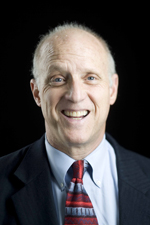
Michael Goldsmith joined the BYU law faculty in Fall 1984, during my second year as a student. He was my Evidence and Criminal Procedure professor. I still remember where I was when I first learned of the Space Shuttle Challenger disaster – his Crim Pro class.
Michael Goldsmith was diagnosed with ALS in September 2006.
In an article he wrote for Newsweek in November 2008, Professor Goldsmith recounts attending a fantasy baseball camp after learning of the diagnosis. The camp was hosted by his boyhood team, the Baltimore Orioles. (Gehrig’s streak of playing in 2,130 consecutive baseball games stood the test of time until Oriole legend Cal Ripken, Jr., broke the mark in 1995.) While attending the camp, he realized that July 4, 2009, marks the 70th anniversary of Gehrig’s timeless farewell speech. And in the article, Professor Goldsmith made this heartfelt, and personal, plea to Major League Baseball:
Major League Baseball is responding. As reported in this recent New York Times story, ballparks around the country on July 4 will take steps to raise awareness of ALS and funding for its research. MLB is calling its campaign “4♦ALS Awareness” (the “4” being Gehrig’s uniform number) and has announced that Lou Gehrig’s “luckiest man” speech will be read during the seventh-inning stretch of ballgames held on July 4.
Professor Goldsmith, I’ll be thinking of you often as you stand at the plate and face your greatest challenge. And my wish for you is that Major League Baseball invites you to deliver Lou Gehrig’s speech when your Baltimore Orioles play the Los Angeles Angels in Anaheim on July 4.