

 We had our faculty retreat last week, which, strangely, got me thinking about drilling holes in my head. So I decided to do some internet digging on the phenomenon.
Via Wired Science,
Archeologists have found some amazing things in peat bogs. Like more than 270 kegs of “bog
butter.” And lots of bodies (see photo, via Archeology, below), preserved by Sphagnum mosses, which come with preservatives built
into their cell walls. Archaeologists
believe the bogs were sites for ritual sacrifices, because many of the bodies
appear to have been tortured or “overkilled.”
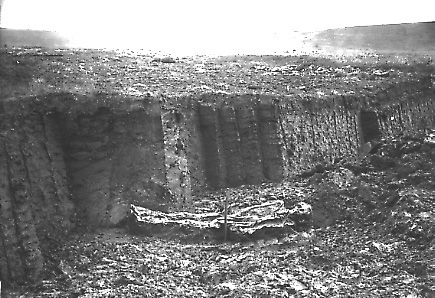 But murder wasn’t all that happened out on the bogs.
Multiple trepanated skulls – that is, skulls with holes drilled in them — have
been found. (see photo, via Wired Science, below) Based on the use of the procedure in
medieval times, one hypothesis is that the “operation may have been performed
to remove a blood clot or a less-tangible thing like a spirit” from an
individual.
Today,
according to Wikipedia, “trepanation is a treatment used for epidural and
subdural hematomas, and for surgical access for certain other neurosurgical
procedures, such as intracranial pressure monitoring. Modern surgeons generally
use the term craniotomy for this procedure.”
 Even now, there’s still a small number of people who think
drilling holes in their skulls is therapeutic. See, for example, the website of ITAG (the International Trepanation Advocacy Group) here.
From Wikipedia:
Although considered today to be pseudoscience, the practice
of trepanation for other purported medical benefits continues. The most
prominent explanation for these benefits is offered by Dutchman Bart Huges
(alternatively spelled Bart Hughes). He is sometimes called Dr. Bart Hughes
although he did not complete his medical degree. Hughes claims that trepanation
increases "brain blood volume" and thereby enhances cerebral
metabolism in a manner similar to cerebral vasodilators such as ginkgo biloba.
No published results have supported these claims.
Other modern practitioners of trepanation claim that it holds
other medical benefits, such as a treatment for depression or other
psychological ailments. In 2000, two men from Cedar City, Utah were prosecuted
for practicing medicine without a license after they performed a trepanation on
an English woman to treat her chronic fatigue syndrome and depression.
However, individuals may practice non-emergency trepanation
for psychic purposes. A prominent proponent of the modern view is Peter
Halvorson, who drilled a hole in the front of his own skull to increase
"brain blood volume".
Here’s a trailer for the documentary, A Hole In the Head, which (although completely disgusting) demonstrates
the procedure and the rationales of trepanation's practitioners in some detail.
Also, according to Paul McCartney, John Lennon wanted Paul
to go with him for trepanations, but Paul wasn’t interested. See video footage here.
As to “retreat,” it has a few meanings. (1) An act or process of withdrawing
especially from what is difficult, dangerous, or disagreeable; (2) a period of
group withdrawal for prayer, meditation, study, or instruction under a director;
(3) a place you go (preferably out of town) with golf clubs and/or tennis racquets;
or, alternatively, yoga mats and spa treatments. The first two definitions are from Merriam-Webster. I made up the third.
But can’t we all agree that if it’s just your colleagues
sitting around a classroom talking about curriculum and staffing issues, then
it’s a faculty meeting – albeit an interminably long and boring one – and not a
“retreat?” Of course, we have to have these and all sorts of other meetings if we are to get anything done, and I doubt that the "retreat" is any more pleasant for the dean than for the rest of us (perhaps less so). But now that I know a hole in the head is therapeutic, I may have to reorder my "things I don't want to do this week" hierarchy.