

 I'm thinking this evening about the book I've been working on for the last few years — or, depending on how one looks at this, for like half my adult life. I prefer to frame it as the former rather than the later, because it makes me feel better about how long I've been working on this. The book is about jurisprudence and proslavery thought in the old South. I study academics' writings, as well as those of judges, and an occassional anti-slavery writer. Mostly I'm interested in pretty dense material like treatises and appellate cases, but I also use trials, orations, articles in periodicals, speeches in Congress and on the stump … even the occassional novel. (The issue about length of time is: do I count the years I spent working on my dissertation, which is on a simlar topic? My dissertation was heavily focused on pre-Civil War property doctrine; those were back in the days when legal historians didn't seem all that interested in doctrine. Over time I migrated to being more interested in issues of jurisprudence, even non-judicial statements about law. Now I realize that interest in doctrine in legal history is making a come-back. So I'm in the situation that I'm out of touch again with the field. Well, at least I can dust off those chapters on the subtleties of vested rights doctrine….)
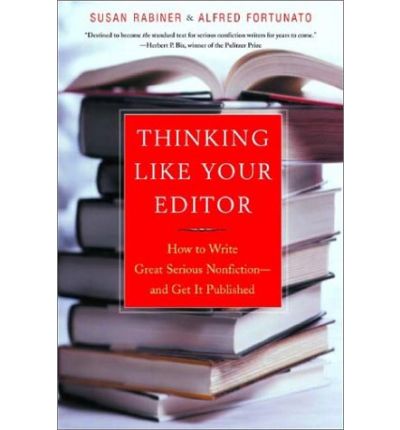
Right now I'm thinking about dealing with editors — and so I have pulled off the shelf one of the great, GREAT books for academics — Susan Rabiner and Alfred Fortunato's Thinking Like Your Editor. I rarely can tell if anyone actually listens to anything I write here. But I must say this — affecting the voice I use with students when I'm saying something they really need to hear, like what's on the exam, what's on the bar exam, or something that's a malpractice trap they might encounter — if you're working on amonograph, you would really benefit from Thinking Like Your Editor. It's easily worth the $10 or so that you'll spend to get a used copy. Well worth it. Also, you'll want to read — and this is free — Dedi Felman's article from the Chroncile on "What Book Editors Are Looking For."
Forget all that stuff I wrote this spring about Chris Tomlins' Freedom Bound being the work you most need to read in legal history … if you're writing something, this is the book you need to read!
(I wrote some on this five years ago — actually, I now see *exactly* five years ago, when I was posting at ratiojuris.)
I've been writing a book all my adult life, which isn't so bad since I'm only 29. I read Rabiner's book previously. I think I own it in fact. I'm not sure anymore. But anyhow, I agree; it's well worth the read. I'll check out the Felman article. Seems interesting.
Susan Rabiner's book is terrific, but please buy a new copy rather than a used one (that is how writers are supported).