

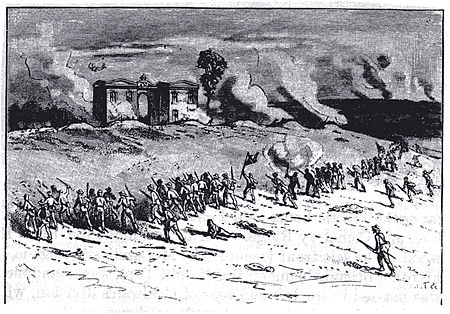
 I want to try a whimsical post with an audacious title. Amidst all the talk this week of the Gettysburg Address and its importance going forward to the United States, I wonder about the significance of the cemetery that already was at Gettysburg when the battle began. First a little background. In the thirty years leading into Civil War there was a movement — most popular among the Whigs, the forerunners of the Republican Party — to establish "rural cemeteries." That is, cemeteries that looked like gardens, rather than graveyards. The first and most famous of these was Cambridge's Mount Auburn cemetery. The reasons for these were many — the cemeteries could instill patriotic values; they were an example of how private charitable corporations could work to improve the republic; they were symbols of civilization; they brought people together to beautify the landscape. Thus, the movement was an important piece of movement towards celebration of the Union's economic and moral benefits. It was a support to the Union. (I've been talking incessantly about them this fall because I'm working on a paper on the constitutional significance of the rural cemeteries.)
The movement stretched throughout the country, but was concentrated in New England and areas of the west settled by New Englanders. For instance Oak Ridge Cemetery in Springfield, Illinois was dedicated in 1860; that is where Lincoln is buried. The movement also stretched to Gettysburg, where in 1855 the citizens dedicated the "Ever Green" cemetery (now known as "Evergreen"). That cemetery gave the name to the ridge on the battlefield where the fighting culminated and ended in the defeat of the Confederate Army. But "Cemetery Hill," where the Ever Green Cemetery is located, was itself important. For that was a high spot on the ground where the United States army anchored its line. I have wondered as I have been reading about the battle whether the fact that there were no buildings on the cemetery's ground made it more useful to the United States. That is, whether in addition to providing sites for promotion of the values of Union, the rural cemetery movement — by preserving the open space at Ever Green cemetery — also helped the United States' military?