

 Jennifer Schuelsser had an excellent article on Craig Wilder's Ebony and Ivy in the New York Times recently. The book is a great capstone to work that's been done on a lot of different schools — from Harvard and Brown, down to William and Mary, UNC, and Alabama. And it covers a lot of ground, from the financing of schools using profits made from slavery, to the presence of enslaved people on campuses, to the ideas about racial hierarchy that were promoted at schools. And while a lot of Wilder's focus is on the founding of schools in the eighteenth century, he also brings the story down into the nineteenth century. What I really like about Ebony and Ivy is that it links many parts of slavery to the story of slavery to colleges. Ebony and Ivy's focus on the north means that this is a story that seems unusual. Of course in the south one ought to expect the colleges will support slavery — in Boston, Hanover, and Providence a less so.
Not only is this a capstone to a lot of work that's been done, it had a lot of new information that hasn't been published before. There's a lot here on the origins of the fortunes of many early supporters of colleges, as well as the ideas on those campuses. This is also an invitation to yet more work on colleges and slavery. Ebony and Ivy leads to more questions about the content of proslavery (and anti-slavery ideas) at colleges. And for me there's the question of how ideas flowed between newspapers, the pulpit, and legislative halls and colleges (and vice versa).
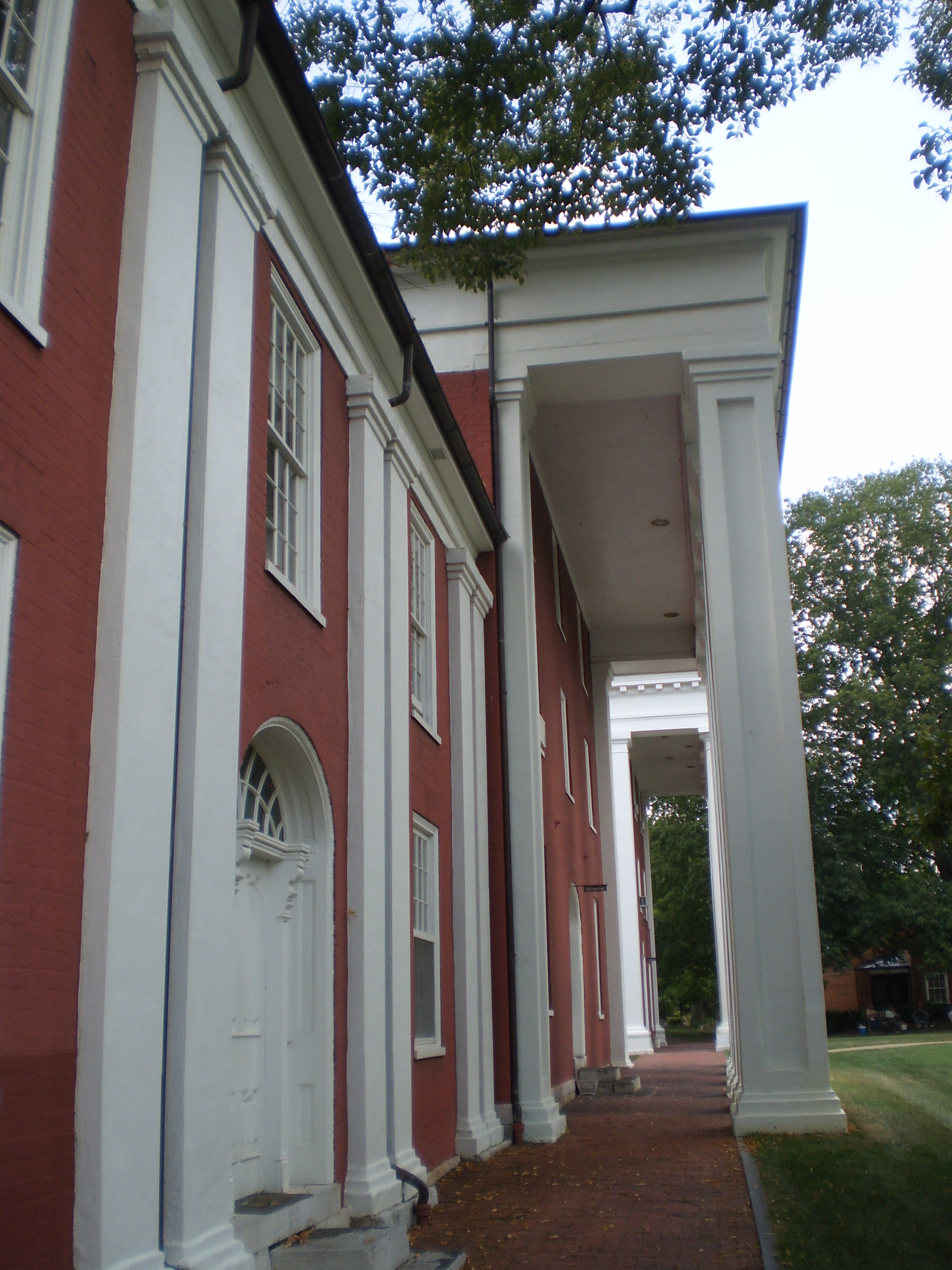
The image is of the colonnade at Washington and Lee (what was Washington College before the Civil War), which figures in Ebony and Ivy.