

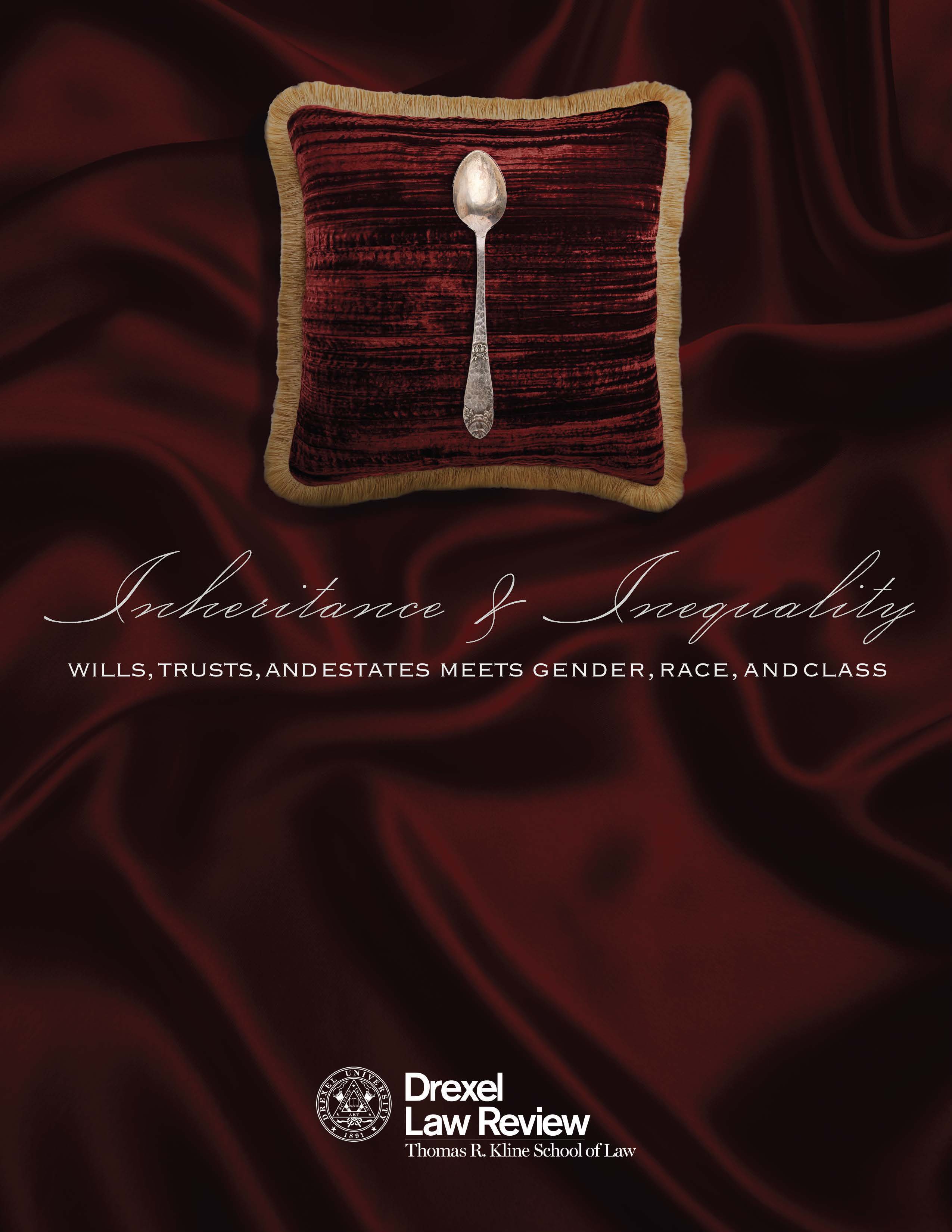
 On September 27-28, 2024, the Drexel Law Review hosted a symposium, Wills, Trusts & Estates Meets Gender, Race, and Class. Here is the program description:
Wealth inequality and all the other forms of inequality that flow from it – social, political, health, educational – have troubled academics, policy makers, economists, and others for some years now. Wealth, and its lack, is tied directly to inheritance, that is, the practices, laws, and culture that facilitate, or inhibit, the transmission of wealth in all its forms from one generation to the next. Speakers at this conference will address the many ways that inequality is embedded in inheritance law and practice around the world; they will also discuss ways to make these laws and practices work for all, including for demographics who have traditionally been cut off from successful wealth transmission. Speakers will address, among other topics, the role of such different technologies and strategies as AI and trusts play in exacerbating or reducing inheritance inequality; the fits and misfits of today’s families and inheritance law; cultural, philosophical, and tax connections; and other intersections between inheritance and inequality.
Interestingly, despite the subtitle of the program, most of the speakers focused on socioeconomic class and less on gender, race, and other identity axes. The full list of speakers and presentations appears after the fold.
Day 1
Panel One: Justifications – or lack thereof – for a System of Inheritance
Moderator: Jack Terrill, Esq., Hecksher Teillon Terrill & Sager, PC
Johanna Jacques, Durham University, United Kingdom, Inheritance as Judgment: A Kantian Argument Against Testamentary Gifts
Shelly Kreiczer-Levy, College of Law and Business, Ramat Gan, Israel,
Because We Cannot Stop for Death: A New Approach to Property Law and Continuity
Carla Spivack, Albany Law School & Deborah Gordon, Drexel University Thomas R. Kline School of Law, The False Ideology of Donative Freedom
Panel Two: Probate and Asset Transfer for the Low and Moderate Income Demographic
Moderator: Kirsten Keane, Esq., Glenmede
Felix B. Chang, Ohio State University Moritz College of Law, Shadow Probate
Allison A. Tait, Richmond Law School, Family Money: Economies of Excess and Extraction
Danaya Wright, University of Florida Levin College of Law, Norman Dacey’s Legacy: How Revocable Trusts Have Transformed Estate Planning and Who is Missing Out
Panel Three: The Intersection of Technology, Trusts & Estates, and Vulnerable People
Moderator: Barry Furrow, Drexel University Thomas R. Kline School of Law
Naomi Cahn, University of Virginia School of Law, Childfluencers, Child Actors, and Blocked Trust Accounts
Tabrez Y. Ebrahim, Lewis & Clark School of Law, AI Access to Justice & the Future of Inheritance?
Chad Osorio, Wageningen University, The Netherlands, AI Aristocracy
Reid Kress Weisbord, Parker Ramsay, & Chris Gitelman, Rutgers Law School, The Impact of New Financial Transaction Technology on Vulnerable Donor Populations
Panel Four: The Uses and Abuses of Trusts
Moderator: Scott Small, Esq., Fiduciary Trust
Bridget J. Crawford, Pace Law School, Fiduciary Frontlines: Trustees at the Crossroads of Duty and Values
Adam Hofri, Allard School of Law, British Columbia, Canada, Looking Through Trusts
Eric Kades, William & Mary School of Law, Piercing the Trust Veil
Nick Piška, University of Kent School of Law, Canterbury, United Kingdom, Trusts and Postcolonialism
Keynote: Chris Rabb, Genealogist, Family Historian, Educator, Author, and Policy-shaper, speaking on the intersection of race, wealth & social enterprise
Day 2
|
Panel Five: Families I: Parents, Children, and Spouses Moderator: Emalee Welsh, Esq., Morgan, Lewis & Bockius LLP Afton Cavanaugh, University of Baltimore School of Law, Families Behind Bars: Inheritance Rights for the Dependents of the Incarcerated Alyssa A. DiRusso, Cumberland School of Law, Fetal Personhood and Inheritance by Unborn Children Diane J. Kemker, Pepperdine Caruso School of Law & Loyola Law School (Los Angeles), Inheritance Inequality and Post-Mortem Enforcement of Child Support Agreements: A Children’s Rights and Contracts Clause Argument |
Panel Six: Families II: Comparing Families
Moderator: Wendy Greene, Drexel University Thomas R. Kline School of Law
Sheryl Buske, Willamette University College of Law, Same Same: Tanzania’s Nyumba Marriages and Inheritance Inequality
Prakriti Malla, South Asian University, New Delhi, India, & Adhiraj Malla, Advocate, Supreme Court, Nepal, Gender Equality in Nepal’s Inheritance Law: Reforms, Challenges, and the Path Forward
Amanda Ward, Queensland University of Technology, Brisbane, Australia, Disinheriting Abusive Heirs: Could a U.S-informed Response to Elder Financial Abuse be Utilized in Australia?
|
Panel Seven: Models for Change: Law, Practice, and Taxes Moderator: Carla Spivack, Albany Law School Aissatou Barry, Brooklyn Law School, Good Mourning: Redesigning Estate Planning As a Tool for Generational Wealth Miles Malbrough, Wake Forest University School of Law, Progressive Probate: How State Law and Local Rules Can Reduce Financial Barriers to Intergenerational Wealth Building Emily Stolzenberg, Villanova Charles Widger School of Law, Things of Value Sarah E. Waldeck, Loyola University Chicago School of Law, Jurisdictional Competition for Ordinary Estates Phyllis C. Taite, University of Oklahoma College of Law, Tax Policy in a Space of Uncertainty: What’s Next After the Tax Cuts and Jobs Act |
Commentary: Bridget Crawford, Pace Law School, & Anthony Infanti, University of Pittsburgh School of Law