

 From the
FT:
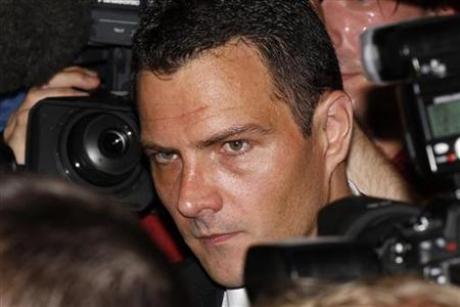
The three-week trial of Jérôme Kerviel opened with great
fanfare in Paris on Tuesday. More than 90 different newspapers, TV and radio
organisations and press agencies are covering the event, and the question on
everybody’s mind – in France at least – is who really is on trial? . . .
So coming back to the original question of who is on trial,
the answer is yes, Mr Kerviel, but also, for completely different reasons,
SocGen for a corporate strategy that has strained and put the bank at risk.
As for the banking system, the popular jury has issued its
guilty verdict long ago.
I have to admit that I’m somewhat astonished at the interest
the trial is generating. I’ve been anxiously awaiting the trial
all year, but then my obsession is excused (at least in my mind) by two articles
and a book
chapter on rogue trading. I
plan to blog some more about the specifics of the Kerviel case as the trial
unfolds, but the bit quoted above from the FT has prompted me to reflect at
greater length about the intense interest in the trial.
The rogue trader captured public attention in the 1990s — numerous
popular books and movies memorialized infamous rogue traders of the decade,
such as Nick Leeson and Joseph Jett.
But, thanks in part to Jérôme Kerviel, the image of the rogue trader has
again returned to the spotlight.
There are a few reasons for this, I think. Obviously, the financial crisis has heightened
public awareness of the fragility of the financial system and the potential for
individual and firm-level risk taking to reverberate, with implications for
other institutions, markets, governments, and taxpayers.
Moreover, though the largest and most widely publicized
rogue trading incident, Société Générale is not the only financial institution
to announce large losses from unauthorized trading. Market volatility stemming from the financial crisis has caused
large losses at many financial institutions, bringing to light previously
hidden unauthorized positions. As a result, a number of financial institutions,
including Société Générale, disclosed large rogue trading losses around the
same time period.
Finally, the rogue trader has become more prominent as a
subset of risk management.
Specifically, domestic and international regulatory changes (which I
detail here)
have forced banks worldwide to focus more attention on operational risk, an
important component of which is rogue trading. These changes have transformed,
at least as a formal legal matter, what was once a residual risk category into
a growing multi-billion dollar risk management industry.
Let me emphasize the phrase “as a formal legal matter.” As I’ve argued at length in my research on rogue
trading, of the many (admittedly imperfect) regulatory options for addressing
operational risk available to the Basel Committee, it arguably chose the worst:
an enforced self-regulatory regime that is unlikely to substantially alter the
success with which financial institutions manage operational risk, and that
carries with it the threats of high costs, a false sense of security, and
perverse incentives.
As such, “the system” should
be on trail in the Kerviel case, though probably not for the reasons that have
galvanized the French press and populace.
That’s all I (and probably you) have time for today, but I’ll be back
later with more. I’m sure you
can’t wait.
Image Source: Reuters
Related Posts:
Kerviel’s
Fake Trades: Genius Or Copy Cat?
Kerviel’s
Fake Trades: The Anatomy of A Cover-Up
On
Warning Signs II: Follow The Money
On
Warning Signs: You Can’t Get There From Here
Rogues
Versus Scapegoats
Société
Générale: Back In The Saddle Again
Jérôme
Kerviel to Société Générale: Stand By Your Man
I guess people were okay with "rogue traders" as long as there was no money being lost.
I'm with you, Joe.
Actually, I really can't wait and I'm not being sarcastic. I find this area fascinating and was intrigued by your article on rogue trading. (I had a case involving an allegation of rogue trading back when I was in practice, oh, seven years ago…) Keep up the good work!
Ah, so *you're* the one who read it! Thanks for the kind words. Actually, I'm not that surprised that you'd be interested in the case, given your work on incentives and compensation in organizations. If you were here, we could have a Jerome Kerviel party — what fun.