

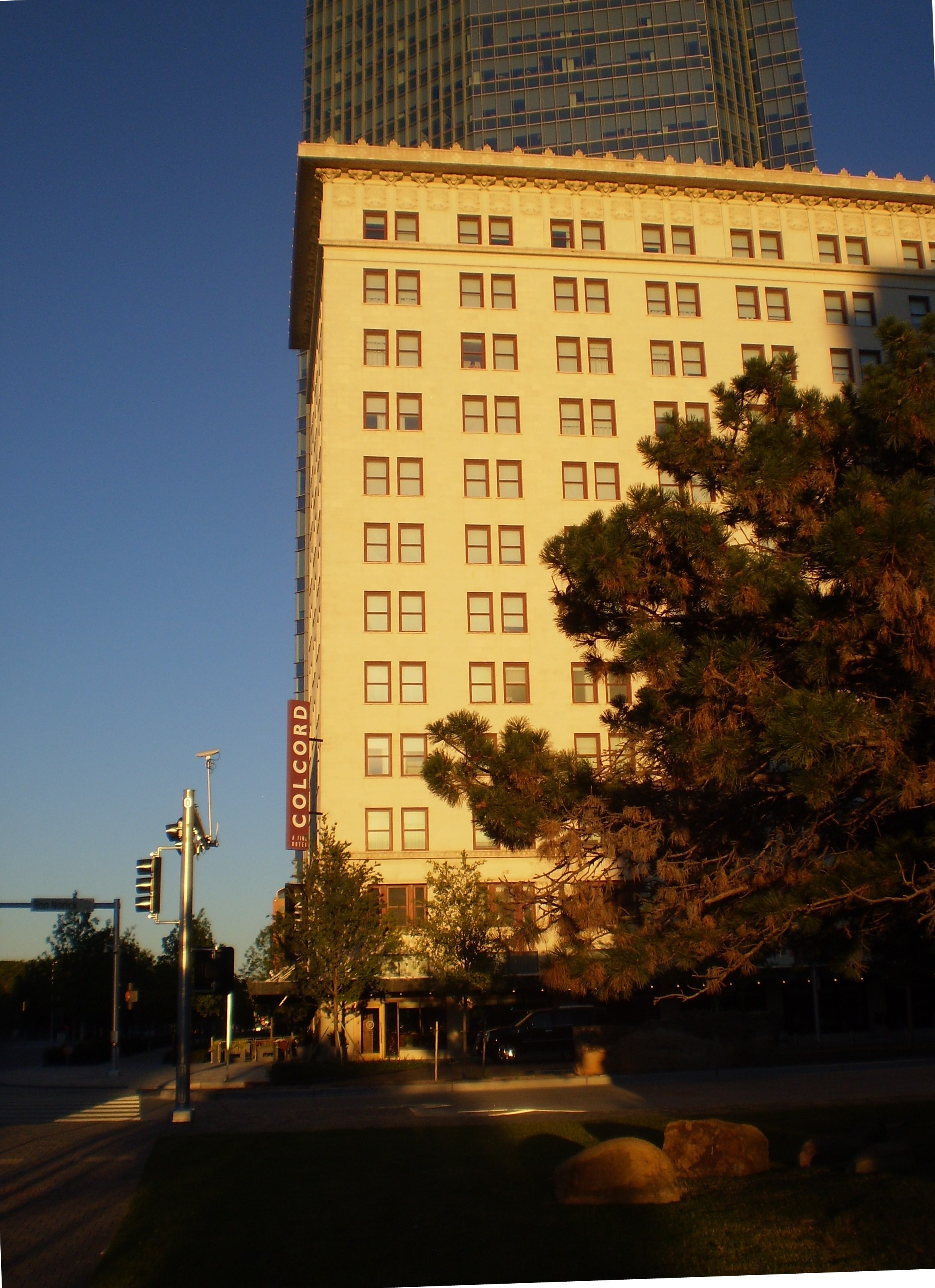
 Well, I'm back from a terrific conference on trusts and estates that Carla Spivack hosted at Oklahoma City University. Because of work and family duties I've not been going to conferences much of late, but I'm really happy that I had the chance to go back to Oklahoma City. The city itself is doing great; what for the rest of the country is the energy crisis has been very good to the state. It just feels like there's an enormous amount of money there and that's generating a lot of benefits for the entire city. The state is also incredibly beautiful and of course for someone interested in race and law, it's a place with a lot to talk about. I was even able to squeeze in a little research at the Oklahoma State Archives. About that I'll talk a little more down the road.
Right now I want to talk about a conversation I had with my friend Phyllis Bernard, who is a student of Ralph Ellison. We had a reception at the Colcord hotel, which was one of the grand hotels in the city in the early twentieth century. It's a magnificent building. Phyllis said she thought this might be the scene of the battle royale in chapter one of Invisible Man. And I said, well, I wondered about that. because one of the characters in chapter one is a Mr. Colcord. No word on where the grand ballroom was back in the 1930s in the Colcord. But maybe on another trip back there I'll learn a little more about that.
There's a lot of speculation in Oklahoma about where various scenes might have taken place. I guess the Skirvin Hotel is another of the common guesses for the battle royale scene. Ellison worked at the Skirvin as a teenager, as I recall.
For what it’s worth–Before establishing his fortune Charles Colcord (who built the Colcord as well as the Commerce Exchange Building and Biltmore Hotel) was a US Marshal and Oklahoma City’s first chief of police. He was also part of the force deputized to stop the 1911 streetcar strike. Lawrence Jackson says that the “counsel” of Ellison’s father “was valuable during the tense moments of the spring 1911 streetcar strike…”
Maybe Ellison knew about that possible connection? Whatever the personal history was or wasn’t, Colcord was a leading capitalist and well-known lawman who helped track down the Dalton gang. He had been a cattleman and speculator and undoubtedly would have been seen by local organizers as someone who made workers “dance for their money.” When the narrator grabs the leg of Colcord’s chair he thinks about toppling him onto the electrified mat of coins that are mockingly laid out as the boys’ wages. I suppose Ellison might have thought that was a fitting punishment for Colcord and his ilk.