

I have the below essay today on Social Science Space, explaining how the error in Leon Redbone's obituary can help ethnographers understand the need to fact check their informants:
Leon Redbone, Fact Checking, and Ethnography

In recent popular music, there have been few if any performers as enigmatic as the late Leon Redbone, who died on May 30. With a vintage repertoire featuring tunes from ragtime, blues, vaudeville, and Tin Pan Alley, and always appearing in dark glasses and a Panama hat, he looked like a figure straight out of the 1920s.
Redbone claimed various birthplaces over the years, including Shreveport, New Orleans, Montreal, and Paris, and once said he was the son of the violinist Niccolo Paganini (1782-1840) and the opera singer Jenny Lind (1820-1887). Unlike other artists who sometimes spun fanciful backstories for themselves – looking at you, Bob Dylan – Redbone never broke character, even off stage, right to the end. The announcement of his death explained that he had “crossed the delta for that beautiful shore at the age of 127.”
It was only this year, long after Redbone had retired from touring due to illness, that his true past emerged. According to his New York Times obituary:
He was actually born on Aug. 26, 1949, in Cyprus. An authoritative article in The Oxford American this year said his parents had relocated there from the Armenian Quarter of Jerusalem after the new Israeli government seized their property. Mr. Redbone’s birth name, the article said, was Dickran Gobalian.
The Oxford American article has more detail:
The Gobalian family is Armenian, products of a diaspora that’s faced centuries of oppression. Redbone’s grandparents were killed in the Turkish-led genocide of over one million Armenians during World War I. His father grew up in an orphanage. His parents were living in the Armenian Quarter of Jerusalem in 1948 when the newly established Israeli government seized their property. They could only have gotten it back . . . by becoming Israeli citizens; instead, they fled empty-handed for Cyprus, then under British rule. Dickran Gobalian was born in the capital city of Nicosia in 1949.
There is a problem with this account, however, which the Oxford American attributes to Beryl Handler, Redbone’s wife and manager. The Israeli government had no control, nor even any presence, in Jerusalem’s Armenian Quarter, located in the walled Old City, until 1967. In fact, the Jordanian Army captured the Jewish Quarter on May 28, 1948, resulting in the expulsion of every Jew from the Old City for the next 19 years.
Whatever caused the Gobalians to leave Jerusalem – they eventually settled in Toronto – it could not have been expropriation of their property by Israel. It is surprising that both The New York Times and The Oxford American missed the obvious historical discrepancy, having evidently relied solely on Handler’s information.
Imagine now that an ethnographer had managed to become embedded in Redbone’s last tour, some time around early 2015. Upon hearing the family origin story, from either Redbone or Handler, our hypothetical ethnographer would have two choices: She could accept the story as told, and repeat it as fact, which is the apparent practice in many ethnographies. Or she could do a little historical digging to determine the accuracy of the Gobalian family lore, in which case she would quickly learn – from virtually any standard source – that the Armenian Quarter had been occupied by Jordan in 1948, not Israel.
In the latter case, our ethnographer should have been moved to broach a whole new set of questions to her subjects.
Had Redbone ever questioned his parents about leaving Jerusalem? Had the elder Gobalians ever spoken angrily about Israel or Jordan, and what did they say? Why did they attribute the loss of their property to Israel, and why had they left the Old City so soon after its occupation by Jordan? Did they ever consider themselves Jordanian citizens? How much of this had Redbone discussed with his parents when he was growing up, and what were his thoughts about the Middle East as an adult? What did Handler, who is Jewish, think of the Jerusalem story? Was she aware of its historical inaccuracy? If so, did she ever discuss it with her husband or in-laws? And most importantly, how would Redbone react to the actual history of the Armenian Quarter, once our ethnographer raised it, and would that change any of his thinking about either his childhood or current events?
The purpose of probing more deeply into the Gobalians’ past would not be to contradict Redbone or shake his faith, but rather to draw a fuller and richer picture of his life. Fact checking, in other words, is not a game of “gotcha,” but rather a means of exploring a subject’s entire background. Fact checking does not challenge or detract from ethnography, but rather enhances its potential by locating narrative fractures, or inflection points, that can lead to more productive inquiries. Thus, our ethnographer would be able to learn far more about Redbone – perhaps the influences on his career, and definitely his relationship with his parents – by searching out the inconsistencies in the family story, rather than simply accepting it as told.
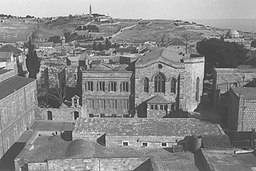
It is conceivable, for example, that the Gobelians had owned property outside the Armenian Quarter in West Jerusalem, which became part of Israel on May 14, 1948. But in that case, their access to it would have been prohibited by Jordan, which had criminalized communicating with “the enemy,” and did not allow its citizens or residents, including Old City Armenians, to enter Israel. This again would have been a ripe subject for further questioning. How much did Redbone know, or care about, his parents’ interactions with either Israel or Jordan? And had he ever considered reclaiming or obtaining compensation for the family property under Israel’s Absentee Property Law? Had the Gobelians blamed their misfortune on Israel out of loyalty to Jordan or antipathy toward the Jewish state, or was it simply the most easily understood explanation for their friends and children? After all, it is well-known that the Israelis began confiscating Palestinian property beginning in 1948, even though none of it was in the Armenian Quarter.
Perhaps the creation of origin myths is a family tradition of the Gobelians. It would be fascinating to find out, which is something that could be done only by asking.
It is common for ethnographers to explain that their mission is to “give voice” to marginalized populations, which would certainly include Armenian refugees who were the descendants of Turkish genocide survivors. But giving voice should not exclude attempts at verification, which can open the doors to even greater insights and understanding. We can learn more about subjects, without silencing them, by subjecting their stories to fact checking.
***
Correction, June 4, 2019: An earlier version of this article stated that the Gobalians lived in Jerusalem’s Armenian Quarter in 1948, but new accounts from family members suggest otherwise. As a result, we have removed some details about the circumstances surrounding their departure.
The amended text now says nothing about confiscated property, and reads instead:
According to family members, [Redbone’s] parents were living in present-day Israel in 1948, when the Arab-Israeli War broke out. They fled empty handed for Cyprus, then under British rule.
This development strengthens my point about the importance of fact checking. The New York Times has not made a correction, and did not respond to my letter seeking one.
"Thus, our ethnographer would be able to learn far more about Redbone – perhaps the influences on his career, and definitely his relationship with his parents – by searching out the inconsistencies in the family story, rather than simply accepting it as told."
Elizabeth Warren?