

 Well, this is, so far as I can tell, the anniversary of my oldest memory. I recall running up the stairs in our house to call mom to come down and watch the television–a little black and white set–because we were about to land on the moon.
Swan sued Guille in the Justices' Court, in an action of trespass, for
entering his close, and treading down his roots and vegetables, &c.
in a garden in the city of New-York. The facts were, that
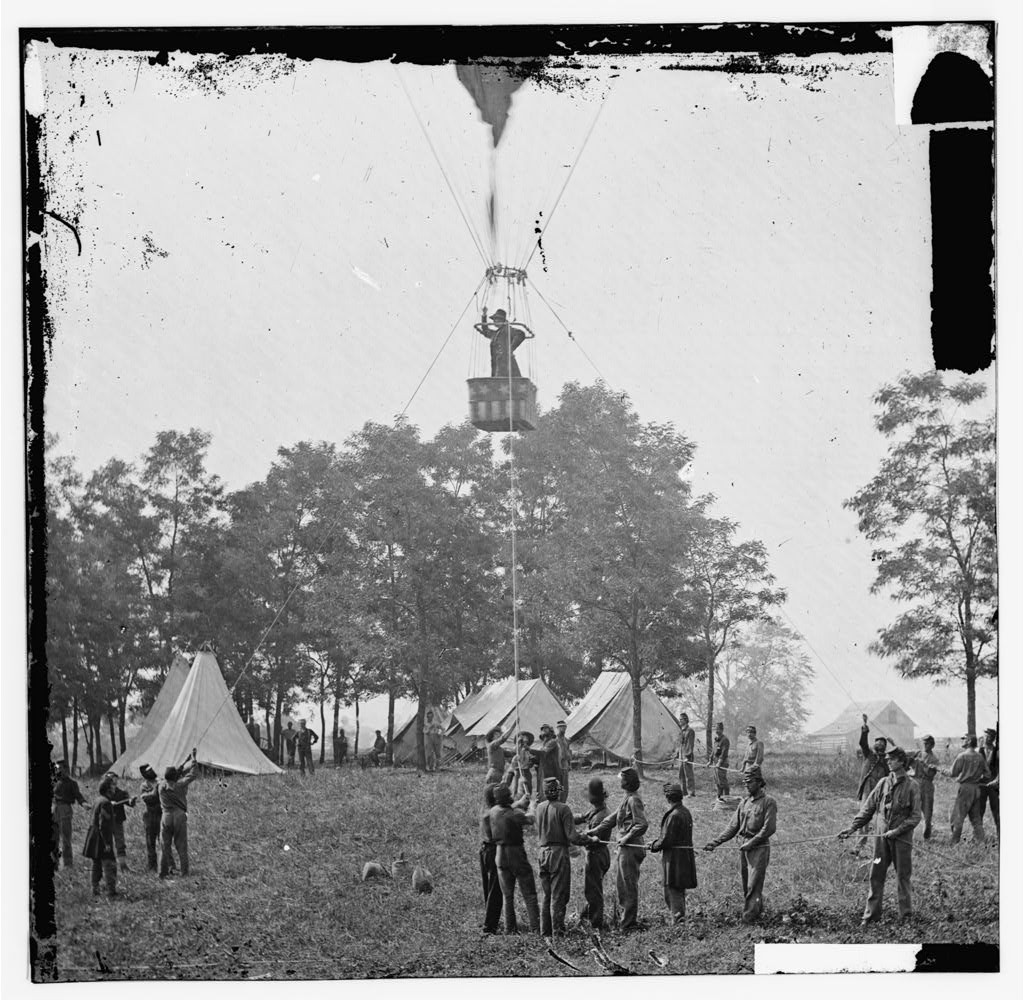
Guille ascended in a balloon in the vicinity of
Swan's garden, and descended into his garden. When he descended,
his body was hanging out of the car of the balloon in a very perilous
situation, and he called to a person at work in Swan's field, to help him, in a voice audible to the pursuing
crowd. After the balloon descended, it dragged along over potatoes and
radishes, about thirty feet, when Guille was taken out. The balloon was carried to a barn at the farther end of the premises. When the balloon descended, more than two
hundred persons broke into Swan's garden through the fences, and came on his premises, beating down his vegetables and flowers. The damage done by Guille, with his balloon, was about 15 dollars, but the crowd did much more. The plaintiff's damages, in all, amounted to 90 dollars. It was contended before the Justice, that Guille was answerable only for the damage done by himself, and not for the damage done by the crowd. The Justice was of the opinion, and so instructed the jury, that the defendant was answerable for all the damages done to the plaintiff. The jury, accordingly, found a verdict for him, for 90 dollars, on which the judgment was given, and for costs.
[I]t is certain, that the Æronaut has no control over its motion horizontally; he is at the sport of the winds, and is to descend when and how he can; his reaching the earth is a matter of hazard. He did descend on the premises of the plaintiff below, at a short distance from the place where he ascended. Now, if his descent, under such circumstances, would, ordinarily and naturally, draw a crowd of people about him, either from curiosity, or for the purpose of rescuing him from a
perilous situation; all this he ought to have foreseen, and must be responsible for. Whether the crowd heard him call for help or not, is immaterial; he had put himself in a situation to invite help, and they rushed forward, impelled, perhaps, by the double motive of rendering aid, and gratifying a curiosity which he had excited. Can it be
doubted, that if the plaintiff in error had beckoned to the crowd to come to his assistance, that he would be liable for their trespass in entering the enclosure? I think not.

Hello.
The case is really interesting. I'm from Spain and I have studied this case as Law of Torts in the University. But I can't understand why the case is called "Guille v. Swan", when Swan sued Guille for the damages. It should be "Swan v. Guille", shouldn't it.
Thank you very much for the entry.
J.T.
Swan (the gardener) sued and won at trial. At trial the case was called Swan v. Guille.
However, when Guille lost at trial, he had to appeal. On appeal the person appealing is (usually) listed first, hence the case was called Guille v. Swan.
OK. It's clear. I hadn't thought of the possibility of an appeal.
Thanks again.
J.T.