

Today's New York Times has an article titled "In Juries, Lawyers Now Favor the Uninformed," with the subtitle "Jury selection in Martin Shkreli’s trial followed the growing tendency to cut not only jurors who have an opinion, but also those who know anything about a case." The gist of the piece is that there is something new (or newly emphasized) about selecting jurors who know nothing of the underlying facts. As reporter Stephanie Clifford describes attorneys during jury selection,
They are looking for jurors who not only have no viewpoints on the case, but also little exposure to the subject matter, who don’t follow the news, haven’t traveled to the places discussed at trial and have pastimes as innocuous as possible.
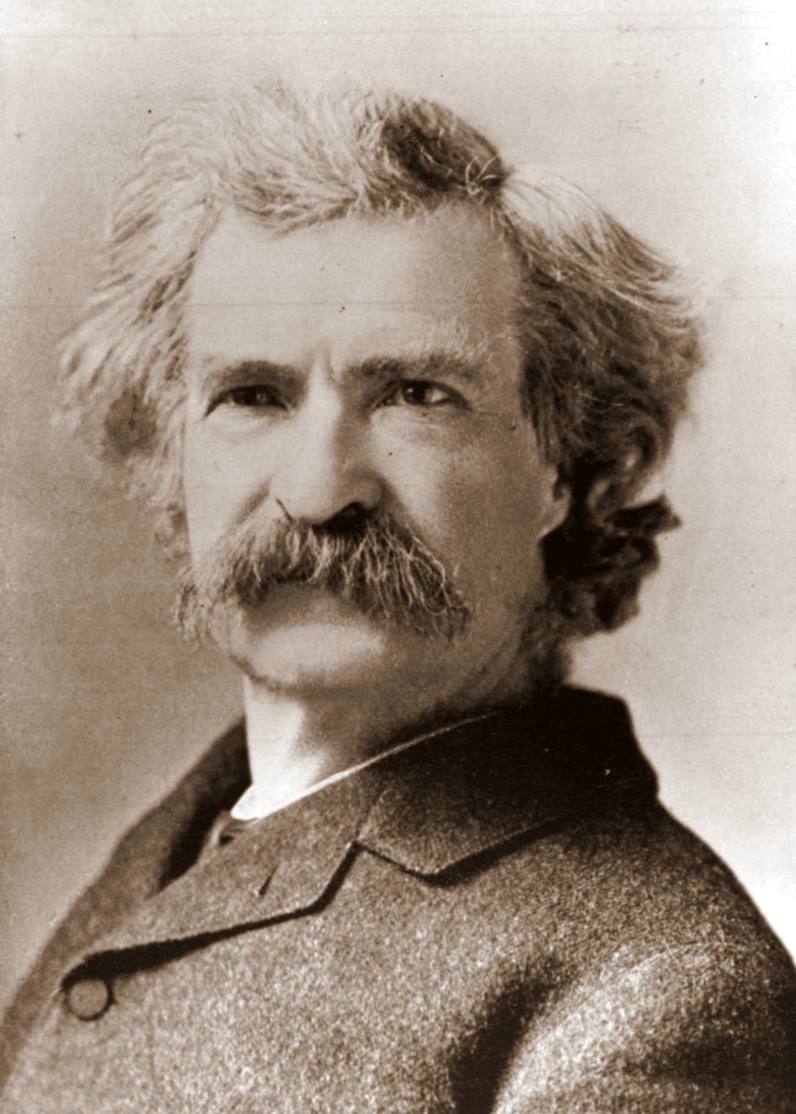
Clifford's examples, drawn from cases around the country are accurate, but I don't think she makes her case for a sea change in attorney behavior. Here is what Mark Twain had to say about jury selection in the 19th century:
We have a criminal jury system which is superior to any in the world; and its efficiency is only marred by the difficulty of finding twelve men every day who don't know anything and can't read.
– 4th of July speech 1873
An ignorance so shining and conspicuous as yours–now I have it–go on a jury. That is your place.
- New York Weekly, 7/14/1873 (letter originally written to Josh Billings, 3/1873)
The jury system puts a ban upon intelligence and honesty, and a premium upon ignorance, stupidity and perjury. It is a shame that we must continue to use a worthless system because it was good a thousand years ago…I desire to tamper with the jury law. I wish to so alter it as to put a premium on intelligence and character, and close the jury box against idiots, blacklegs, and people who do not read newspapers. But no doubt I shall be defeated–every effort I make to save the country "misses fire."
- Roughing It (1872)
The humorist who invented trial by jury played a colossal practical joke upon the world, but since we have the system we ought to try and respect it. A thing which is not thoroughly easy to do, when we reflect that by command of the law a criminal juror must be an intellectual vacuum, attached to a melting heart and perfectly macaronian bowels of compassion.
-"Foster's Case," New York Tribune, 3/10/1873
Twain had many complaints about jurors, but he was especially concerned that they had to be "people who do not read newspapers."
The Jury is never wrong. They may not get it right, but they are never wrong. Most of the criminal attorneys I know, seek the most educated, working in professions with exposure to a lot of different people who might accuse them of something. Teachers are perfect. We stay away from folks who we believe would rotely take the word of a copper or prosecutor.
I can't track it down, but a few decades ago someone did a study of conviction/acquittal rates in terrorism cases between the English courts – jury, the Irish Special Criminal Court and Northern Ireland's so-called Diplock Courts (single judge), as well as non-terrorism cases in the Republic and Northern Ireland (jury in all cases for felonies.) Oddly enough they found conviction rates higher before juries, lower before the 3-judge panel and lowest before a single judge.
I asked lawyers both juniors and SC/QC and solicitors with experience in both systems. Their explanation was rather simple – judges don't trust the police as much as juries do. Juries are to a degree neophytes, but typically law abiding middle class or skill classes, and are inclined to defer to police officers. Judges tend to be more jaded and inclined to doubt police evidence, especially when uncorroberated. To put it more simply, policemen often lie, and judges know that. Or as my very conservative law and order grandfather put it from decades of experience 'a lawyer must never trust a guard.'
Sorry, Special,Criminal Court is a 3-judge panel. Used in terrorism cases and organised crime where there is considered to be a serious risk of jury intimidation.
To add a comparative literary element, albeit less comical, we could look to André Gide's remarkable Souvenirs de la cour d'assises, his memoire of his time serving on a jury in the early part of the 20th century. His "opinion on the composition of the jury" was that the French selection process was "extremely defective", a "selection à rebours", or, roughly, an upside-down selection process in which the least qualified rose to the top while the most qualified were excluded — all those potential jurors who "appeared to merit [being jurors] seemed to have been systematically eliminated". As to the obvious response — how did someone has learned and humane as Gide get to be a juror — he responds that he was only placed on the initial list of potential jurors because he insisted on serving. The official in charge of putting the initial lists together had for years excluded Gide out of fear of bothering and inconveniencing the famous author. Gide suggests that even had he been put on the initial lists all those years, he very well may have been excluded by the particular judge from sitting on actual cases out of systemic distrust of "intellectuals". Those jurors who did make it through the process, some illiterate, most unsophisticated, were easily confused by the lawyers and by the witnesses,thrown into "disarray" and as such were easily manipulated by the trial judge, who could use his authority to steer the jurors toward outcomes more severe than the jury might have wished to impose. Gide's ultimate judgment is a profound skepticism of the judgment of juries and of the quality of justice that they mete. His advice to the reader: "Sitting on the juror's bench, I repeat to myself the words of Christ: judge not."
When I was an LLM student at Berkeley (25 years ago), one of the senior profs gave us an overview of the American legal system. It was pitched particularly at the civilians, who were a majority of the class. I remember him saying that the integrity of American criminal law depended upon a dozen people who were too stupid to be able to get out of jury duty. Cynical, perhaps, but he had a point.