

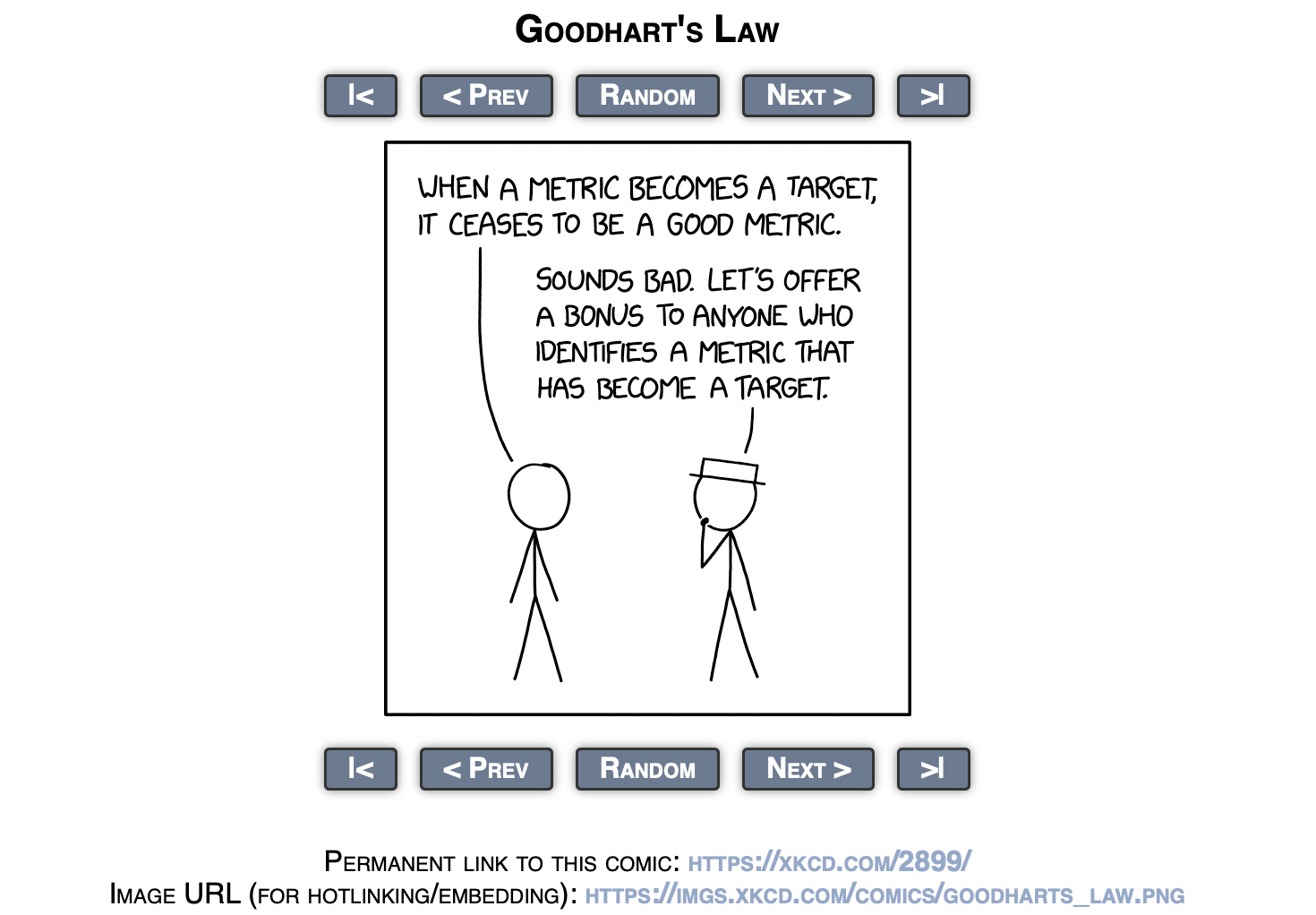
In the latest example of Goodhart's Law, a recent paper finds evidence that researchers are purchasing citations in order to boost their citation metrics. From the paper:
In this study, we analyze over 1.6 million Google Scholar profiles and identify instances of citation manipulation to boost an author’s citation metrics. In many cases, this was done through a previously undocumented practice of “citation purchasing”, where an author pays a small fee to a third party company which provides citations to the author in bulk. We confirm that this practice is possible by purchasing citations to a fictional author. This type of manipulation is of particular concern due to Google Scholar’s wide-spread use in scientist evaluation processes, which we confirm with a survey of faculty from top-ranked universities. Our findings bring to light new forms of citation manipulation and emphasize the need to look beyond citation counts.
Here is the paper. And here is the abstract:
Google Scholar is manipulatable
Citations are widely considered in scientists' evaluation. As such, scientists may be incentivized to inflate their citation counts. While previous literature has examined self-citations and citation cartels, it remains unclear whether scientists can purchase citations. Here, we compile a dataset of ~1.6 million profiles on Google Scholar to examine instances of citation fraud on the platform. We survey faculty at highly-ranked universities, and confirm that Google Scholar is widely used when evaluating scientists. Intrigued by a citation-boosting service that we unravelled during our investigation, we contacted the service while undercover as a fictional author, and managed to purchase 50 citations. These findings provide conclusive evidence that citations can be bought in bulk, and highlight the need to look beyond citation counts.
Update 5/27: Derek Muller raised this concern about USNWR's Hein-based citation metrics back in 2019.